


JAZZ REVIEW | Michael Barton, "The Anxiety Suite" by Jeff Cebulski
Updated: May 9
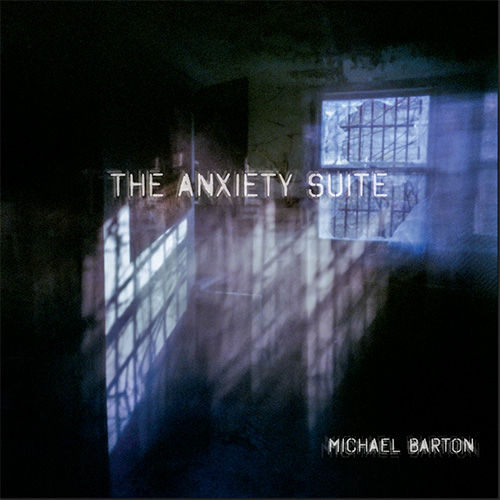
Michael Barton
The Anxiety Suite
Self-produced, 2026.
By Jeff Cebulski | ⭐️⭐️⭐️
Michael Barton: bass, wires, programming, hack guitar, synth, keys, field recording
Collin Clauson: organ, piano, Moog, keys
Greg Essig: drums
Shawn Maxwell: clarinet
Joel Ream: guitar
Niles Higdon: percussion
Rick Vitek: drums
For many musicians, the COVID pandemic period inadvertently created a time for deep reflection and experimentation. Given the ready technology that has evolved over the past 40 years or so, an artist could busy themselves by composing and recording in the forced solitude, even including friends from afar via the Internet if needed. We may still be hearing the products of that era several years down the road.
One Chicago-area musician who took advantage of that situation was bassist, photographer, and educator Michael Barton, whose restlessness sent him downstairs to dabble with his sound toys to keep from driving his family crazy. Sometimes enclosed spaces lead to productivity; you look at what you have put off doing, and, well, do it. The pandemic came when Barton was at an existential crossroad and a desire to communicate a seeded idea that began to sprout. Turning to his notes, his bits of recordings, and his inclination for sonic exploration, Barton set out to complete what became The Anxiety Suite, a multi-media/sensory, biographical statement that teeter-totters from emotional dregs to hopefulness.
Those who are curious about his story are asked, on Barton’s Bandcamp site, to dive in fully, to read his notes, look at the self-produced art, and listen to the album from start to finish, as a multi-media experience. The album is supplied with copious notes and images scattered throughout, as if he provides clues in an escape room. The music is more than background, though; the compositions point to tone and mood—even if somewhat cryptic—suggested by the selection titles: “Consumption,” “Low,” “Sketch of Life,” and “The Sign Holder,” among others.
As for the performance, the album is dominated by Barton’s facility with a number of modern instruments, including his bass that is sometimes dominant, surrounded by electronic devices and added instrumentation, including important contributions from drummers Greg Essig and Rick Vitek, who provide vital tension that underlies Barton’s more cerebral content. Take, for example, “Low,” which is conceivably about depression and regret: the keyboard (from Collin Clausen) and synth, punctuated by Barton’s plodding bass, provide a steady drone that Essig emerges from with bombastic pounding that signifies the artist’s desire to end the cognitive fatigue.
Barton is a truth teller, and his narrative is littered with references to his regrets and joys. “Consumption,” a tone poem that rides a heartbeat-like Moog mantra while guitar strings are dragged like forks on plates, does indeed represent overindulgence, both of substances and vocation. (Indeed, Nils Higdon is credited with playing “silverware.”) Eventually, electronics enter in a wild display supported by Essig’s incessant, driving delivery, and the composition turns into a mind-bending suite representing the highs and lows of indulgence.
Perhaps the most endearing track is “April 20,” the date Barton chooses to remember his father’s death (the actual date apparently is not clear). This cut, recorded by another artist prior, is personalized by Barton’s solo performance, pieced together over time, pre-pandemic, as a testimony to what he says is “calm and introspection”; his bass lines again mirror his heartbeat, but this time in a more peaceful manner.
The jazz of this album consists of music concomitant with the emotional vibe. “King of the Bubble” is a funky intro to “Side 2,” a new era. Joel Ream’s pedal-enhanced guitar accompanied by Barton’s electric bass elevate the mood considerably, creating a Quincy Jones-ish TV show theme. “Sketch of Life,” the second pre-pandemic composition, is a Latin-rhythmed bourgeois number originally meant to support an art show; the intended irony presents the conundrum between sophistication and “elevator music.” “The Sign Holder” features Shawn Maxwell on clarinet meant to convey a “circus” where the artist is coping with audience expectations while on display while not being comfortable in the world they inhabit. Maxwell’s contribution is remarkable; he was held back from playing until the background track was completed. After the circus is over, Joel Ream’s pensive acoustic guitar introduces the final section that communicates Barton’s decision to leave it, a fortuitous decision symbolized by “Positude,” led by Barton on his self-made piccolo bass that sounds very much like a guitar, meshed in a chamber moment with Maxwell’s clarinet. “Helen,” a tribute to Barton’s grandmother, closes the narrative in a lovely way, with an almost-gospel coda meant to exude a better climax than the out-of-sorts intro.
Michael Barton’s The Anxiety Suite is worth a listen, especially by an empathetic audience that is willing to undertake a not-overwhelming 36-minute journey into one artist’s multi-faceted personal and sonic experience.
For access and more info to Michael Barton's Recording Visit his BandCamp
About Jeff Cebulski
Jeff Cebulski, who lives in Chicago, is a retired English educator (both secondary and collegiate) and longtime jazz aficionado. His career in jazz includes radio programs at two stations in southeast Wisconsin, an online show on Kennesaw State’s (GA) Owl Radio from 2007 until 2015, and review/feature writing for Chicago Jazz Magazine since 2016, including his column "Jazz With Mr. C". He has interviewed many jazz artists, including Joshua Redman, Charles Lloyd, Dave Holland, John Beasley, and Chris Brubeck, as well as several Chicago-based players. Jeff is a member of the Jazz Journalists Association. Contact Jeff at jeff@chicagojazz.com


